43 Easy Watercolor Painting Ideas for Beginners to Get Started in 2026

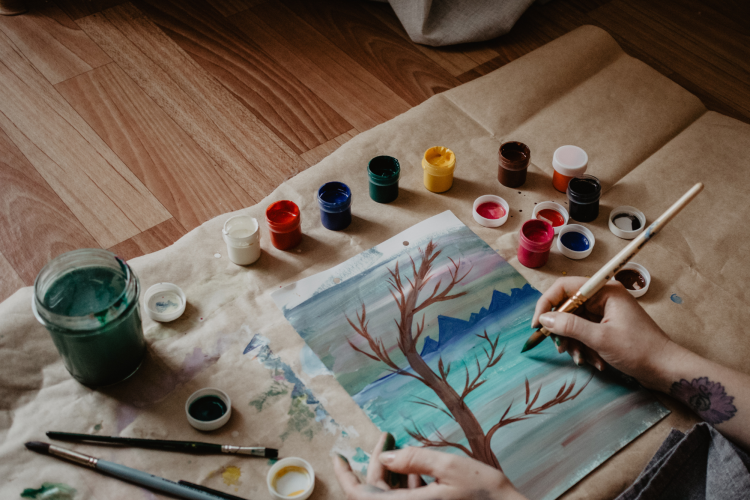
If you’re looking for watercolor painting ideas, it’s usually because the medium feels more approachable than others. Whether it’s truly “easier” is debatable, but it does have a lower barrier to entry. Watercolor reacts quickly, uses very little paint and doesn’t require heavy tools or much setup. The Met notes that modern watercolors form fluid washes with just a touch of water, which makes them more forgiving early on and easier to work with as you learn.
What sets watercolor apart is how directly it responds to you. Each stroke matters. The paint moves, settles and blends in real time, which naturally pulls your attention into what you’re doing. You can’t rush it, and you can’t fully tune out either. That’s part of the appeal.
Research published on ResearchGate looking specifically at watercolor painting backs this up, noting that the medium encourages focus and absorption because of how closely timing, pressure and restraint are tied to the outcome. It’s not just “relaxing” in a vague way. You’re engaged with the paper, the water and the pigment the entire time, and that hands-on feedback becomes part of the experience.
That’s why these watercolor painting ideas focus less on perfection and more on process. Each one is designed to help you understand how watercolor behaves, build confidence through simple subjects and enjoy the act of painting itself, not just what you end up with at the end.
Jump to Section
- How to Get Started With Watercolor Painting Ideas
- Very Easy Watercolor Painting Ideas for Beginners
- Watercolor Painting Ideas With Flowers
- Watercolor Painting Ideas With Landscapes
- Watercolor Painting Ideas With Animals
- Abstract Watercolor Painting Ideas
How to Get Started With Watercolor Painting Ideas

The best way to get started with watercolor painting ideas is to learn the basics. You can get your watercolor exploration underway quickly and easily with painting classes where you’ll learn techniques from skilled artists and top-rated teachers eager to share their skills.
For a fun group activity, try paint and sip in Los Angeles, NYC, Orange County, or paint and sip near you. It’s an exciting way to develop confidence with expert guidance from some dynamite painting teachers.
Or, if in-person sessions aren't for you, there are plenty of online painting classes available for you to learn and practice your new hobby from home.
If you’re up for making a test run on your own as you venture into watercolor painting for beginners, all you need is some watercolor paper, a tray of paint, a jar of water and some brushes. Here are some great watercolor painting ideas to get your feet wet.
Very Easy Watercolor Painting Ideas for Beginners
Early watercolor practice works best when the subject doesn’t fight back. Easy painting ideas focus on simple forms, repeatable shapes and loose outcomes let you concentrate on how the paint moves instead of what the final piece is supposed to look like. These kinds of exercises help you notice blending, bleeding and drying without the pressure of realism.
They’re not meant to be polished. They’re meant to teach your hand and eye what watercolor actually does.
1. Fruit
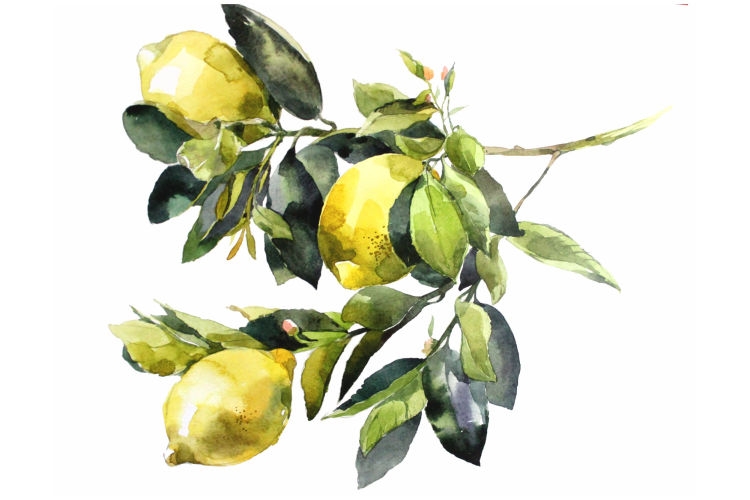
Fruit is a great watercolor painting idea for practicing layered color and soft transitions. Fruit's rounded shapes make it easier to focus on how light and shadow shift across the surface without worrying about hard edges.
Try changing the direction of your light source and notice how the colors change. It’s a simple subject, but it teaches you a lot about how watercolor builds tone gradually rather than all at once.
2. Wet-on-Wet Freeform
This is a great technique for learning how pigment behaves in water. Start by wetting the paper, then touch loaded color to the surface and watch how it spreads.
The bleeding, branching patterns show you how timing and moisture affect the result. Add more color or water while it’s still wet and see how quickly it changes.
3. Gradients
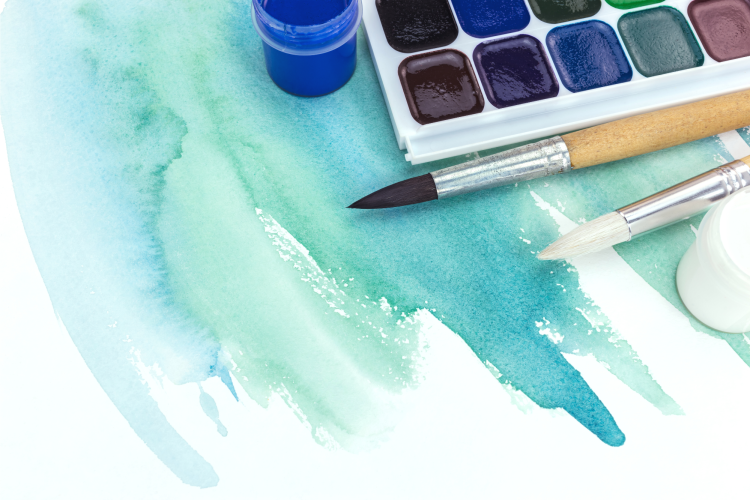
Try this wet-on-wet watercolor painting idea by wetting your paper first, then picking up two related colors — blue and teal, for example — moving from dark to light. Add other colors and spread them together to see how they interact.
Gradients are less about precision and more about control. You’ll start to feel how much water is enough, how quickly colors blend and when to stop touching the page.
4. Geometric Shapes
These are great watercolor painting ideas for testing brush pressure. Paint a shape using water first, then drop in color and watch how it fills the space.
Or try loading your brush with paint and applying color directly to dry paper. Switching between the two helps you understand how water changes the feel of every stroke.
5. Layered Colors

Another easy watercolor painting idea for beginners is layering. Start with a single color using a wet-on-wet wash and let it dry completely.
Once dry, add a second light wash over the top. Watching how the colors interact teaches you how transparent watercolor really is and why patience matters with this medium.
6. Simple Still Life
Once you’re comfortable with basic washes, simple still-life setups are a natural next step. Try setting a few items on a tabletop in front of you and examine how the light and shadows fall on and around them. Be extra attentive to what colors you’re actually seeing.
Try painting what you actually see rather than what you think the colors should be. This helps bridge the gap between practice exercises and more intentional subjects.
7. Color Wheel
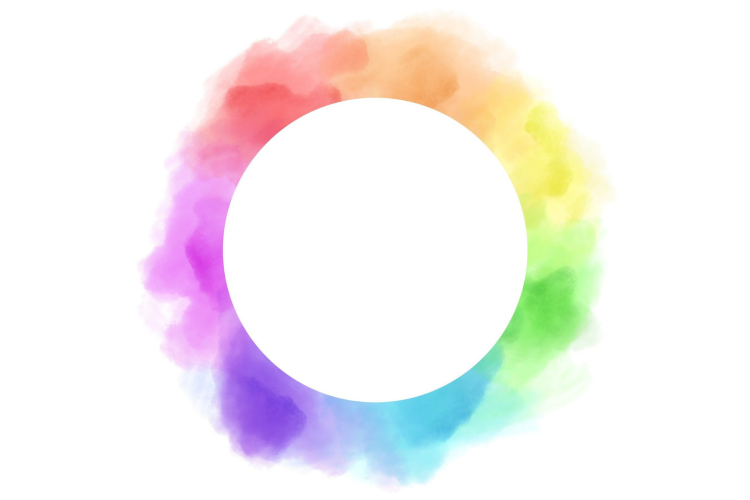
A color wheel is one of the easiest ways to understand how watercolor behaves. Paint the primary colors first in a circle or triangle pattern, then mix them together to fill in the secondary colors in between.
Seeing colors blend on paper — rather than on a palette — helps you understand transparency and dilution much faster.
8. Natural Patterns
Textures like wood, stone, marble and slate work especially well with your watercolor painting ideas. Use wet-on-wet washes, then add colored lines or veins while the initial wash is still damp.
These patterns reward looseness. Small imperfections often make them feel more convincing, which is a good lesson early on.
9. Insects
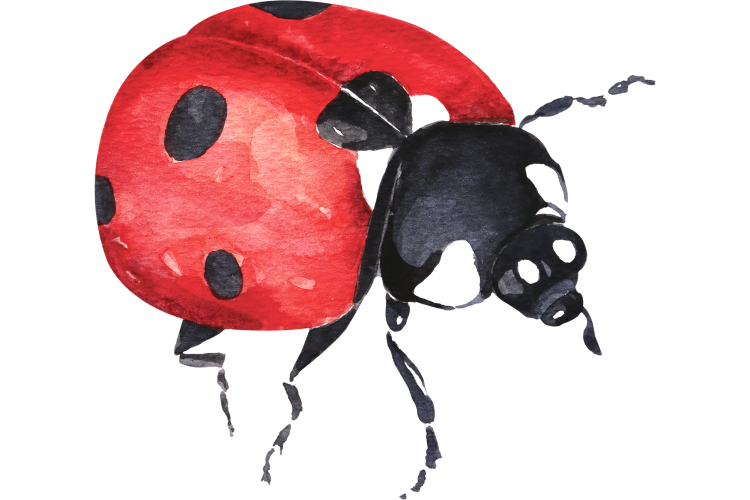
Try a watercolor butterfly, ladybug, caterpillar or other insects with interesting color and textural combinations. Focus on wings, shells or fuzz and let the details emerge naturally rather than forcing them.
Their small size makes it easier to test different brushes and techniques without committing to a large piece.
Watercolor Painting Ideas With Flowers
Flowers are forgiving subjects in watercolor. Petals don’t need hard edges, symmetry isn’t required and soft color shifts often make them more convincing, not less. That makes them ideal for learning layering, transparency and color variation without feeling boxed in.
This is where many beginner painting ideas focus on trusting the medium instead of trying to control it.
10. Orchids
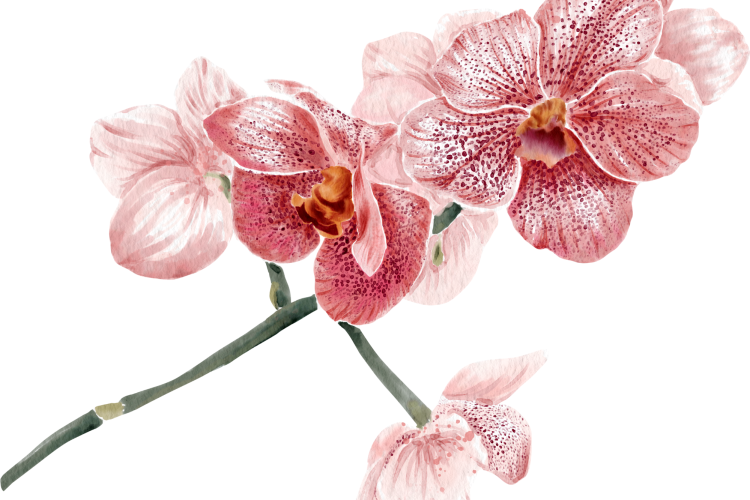
The delicate contours of orchid petals set against linear stems and thick leaves make a great contrast for watercolor practice, which is why they work so well for flower painting ideas for beginners. You can focus on shape and color variation without needing a lot of detail.
11. Wildflowers
Wildflowers work well because they don’t need to be uniform. Different sizes, angles and colors all feel natural, which takes pressure off making multiple flowers look the same.
Whether you paint from life or a reference photo, varying your brush size helps you see how small changes affect balance and movement.
12. Roses
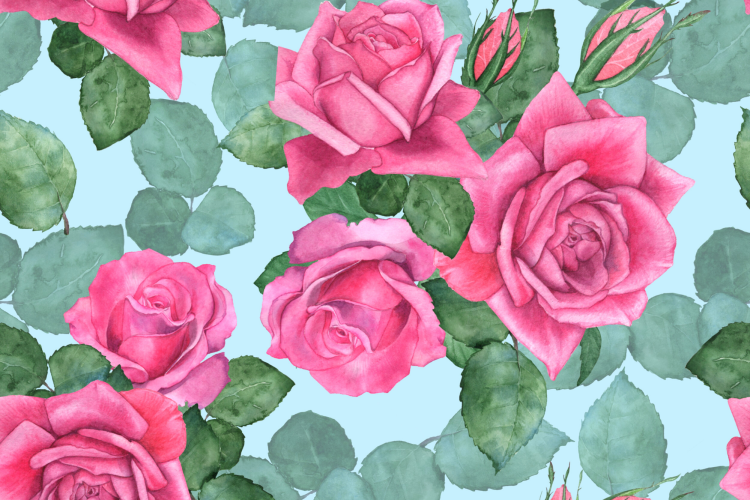
Roses naturally lend themselves to watercolor’s soft edges. Layered petals give you plenty of chances to practice building depth slowly rather than all at once.
Working in light washes helps keep the form loose while still letting the shape emerge over time.
13. Poppies
Watercolor doesn’t always need subtlety and poppies are a good reminder of that. Go bold with a lot of pigment on your brush or play around with creating washes for a more delicate effect.
Try both approaches — a saturated wash and a lighter one — to see how the same subject can feel completely different.
14. Sunflowers
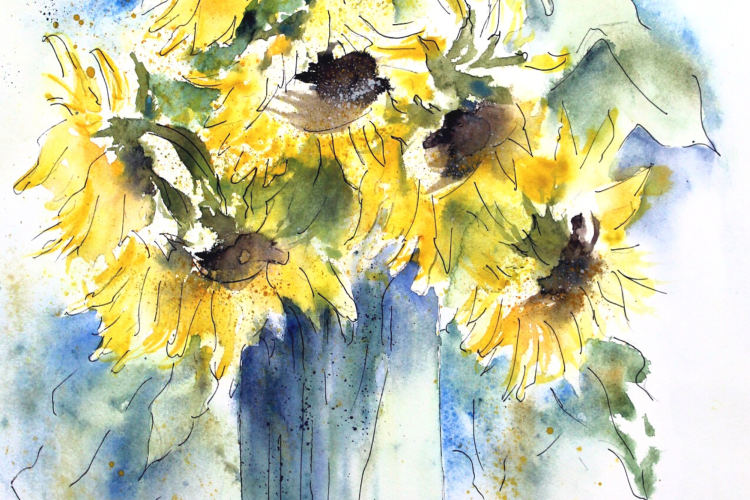
Sunflowers are approachable because their structure is easy to break down. A dark center and repeated petal shapes give you a clear starting point.
Pressing and dragging the brush outward helps you get comfortable with repetition, which is useful when learning consistency in watercolor. Once you have the hang of it, add several sunflower watercolor blooms in different sizes.
15. Hyacinths
With their tall stalks and tufts of colorful blooms, these flowers are a watercolor painting idea that everyone can handle. Try creating the soft clustered tops with some loose brushwork to apply light and shade simultaneously.
16. Mixed Bouquet
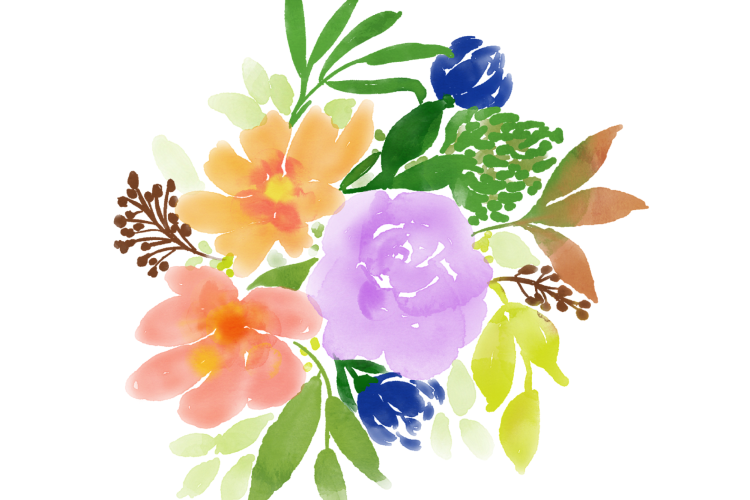
Choose a selection from the list of floral watercolor painting ideas above and create a flower bouquet. Planning your colors ahead of time helps you see how watercolor layers interact across a larger composition without needing tight control.
17. Lilies
Lilies are well suited to wet-on-wet watercolor flower painting ideas because their shape guides the paint naturally. Starting in the center and working outward helps you see how timing affects each layer.
This is a good place to practice restraint — adding more color only when the paper is ready for it.
Watercolor Painting Ideas With Landscapes
Landscapes introduce scale and light in a way that naturally suits watercolor. Distant elements stay soft, details can disappear into washes and mistakes often blend into the scene instead of standing out. You learn how to suggest rather than define, which is a key watercolor skill.
18. Cloudscape
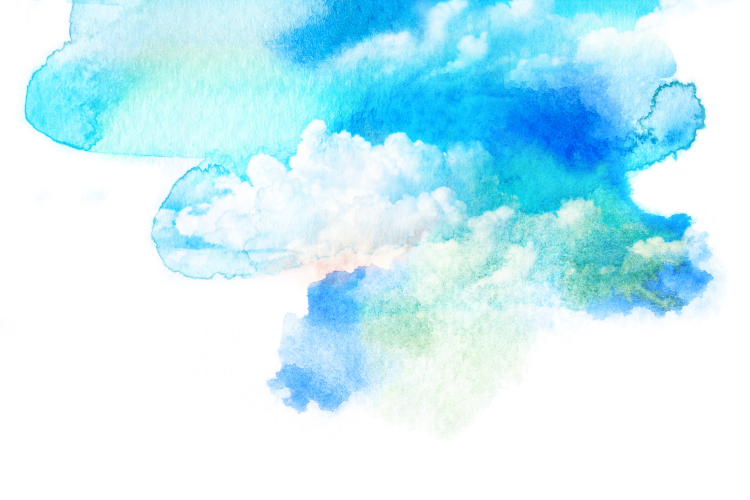
The natural patterns of clouds are excellent for playing with lighter washes. Leaving areas of the paper untouched does more work than adding paint. Build depth slowly by layering darker tones around the highlights rather than painting the clouds themselves.
19. Mountains
Painting watercolor mountains lets you experiment with texture and shadow in your watercolor landscapes. Wet-on-wet washes establish form, while dry brush strokes help suggest texture afterward.
Adding trees or foreground shapes gives context without complicating the composition.
20. Night Sky
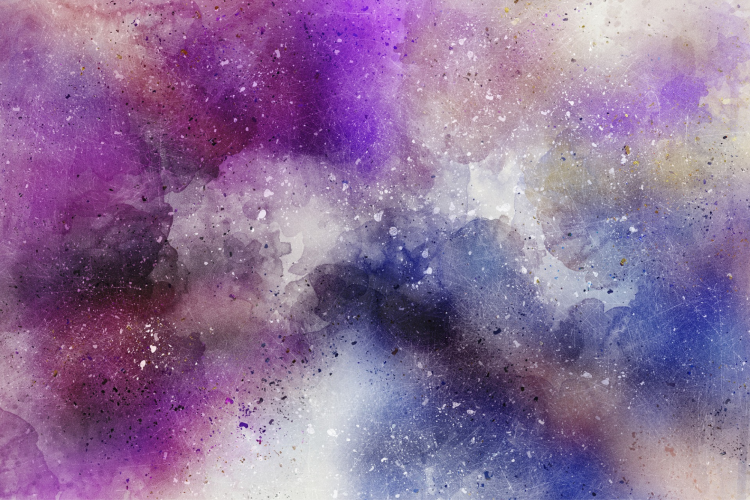
Soft blues and purples create atmosphere quickly and create a beautiful night sky base. Layer lighter blues and violets, then add washes of magenta, aqua and even greens to add depth and cosmic effects.
A few flicks of white from a wet brush add as many stars as you want for this trippy painting idea.
21. Desert
Desert scenes are useful for learning how light shifts color. Browns and greens rarely stand alone, especially in shadow. Introducing purples, blues and muted reds helps the landscape feel dimensional without extra detail.
22. Ocean
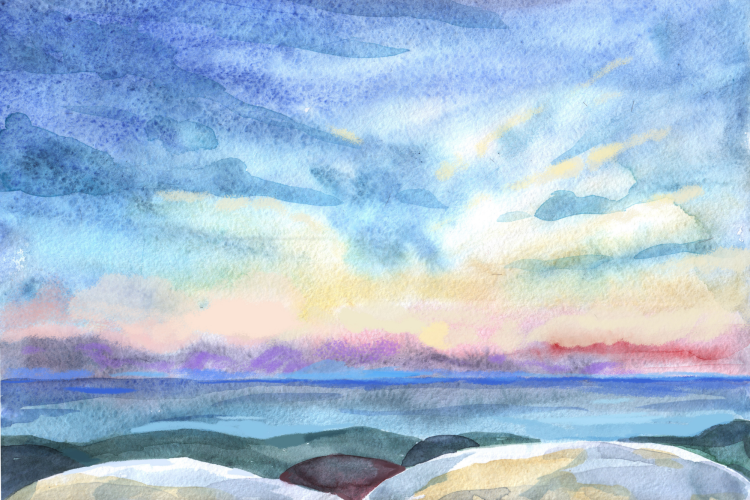
The tranquility of the sea makes a lovely watercolor landscape summer painting idea. Use wet-on-wet techniques to capture the transition from darker water in the distance to lighter water up close. Add foam and whitecaps with a bit of thicker white paint.
23. Meadows
Try capturing a lush meadow or a grassy field as a helpful watercolor painting idea for learning texture. Alternate between dry and wet brush techniques for tall grass stalks and shorter ground cover. For inspiration, check out the many Andrew Wyeth paintings, where his favorite scenes often showed meadows.
24. Forest
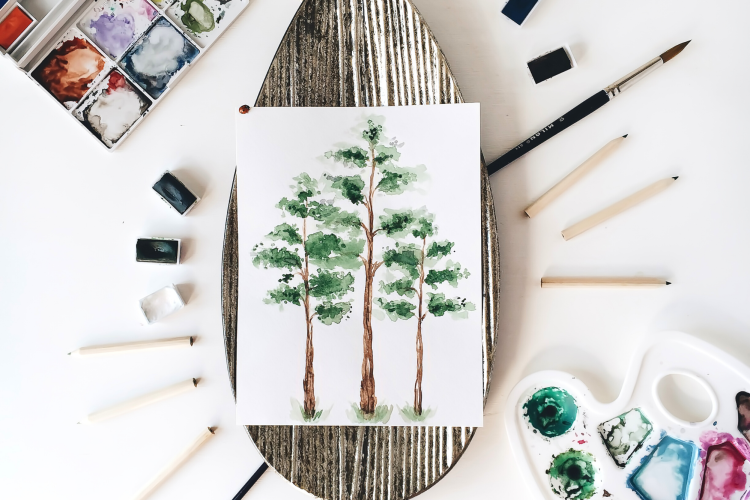
Creating woods filled with watercolor trees teaches depth through contrast. Softer shapes in the background paired with darker foreground trees help guide the eye naturally.
You can either create a detailed portrait with veined leaves and textured bark or paint a silhouette of a pine forest against a moonlit sky.
25. Sunset
A watercolor sunset painting idea lets you practice gradients with a wide range of palettes, depending on the feeling you’re trying to capture. Try an outdoor watercolor sunset painting session and let nature lead the way to your start in painting a landscape.
Sunsets are less about form and more about smooth color shifts. Gradients do most of the work, especially when you let the paper stay wet longer than usual. Painting outdoors or from reference photos helps you notice subtle temperature changes in the sky.
Watercolor Painting Ideas With Animals
Animals push you just enough. They introduce form, texture and movement, but watercolor keeps them from becoming overly rigid. Fur, feathers and scales benefit from layered washes and imperfect edges, which turn beginner uncertainty into visual interest.
This is where observation starts to matter more than precision.
26. Horses
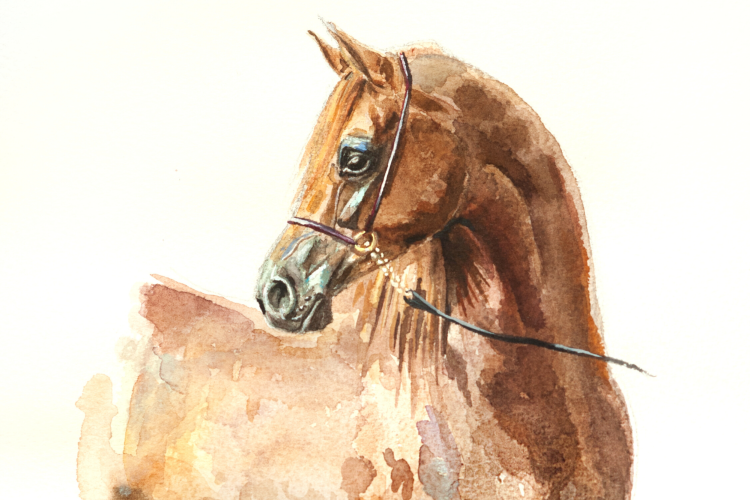
These beauties are a watercolor painting idea that helps you practice light, shading and shape. Start by sketching or tracing a simple horse form. Add layers of colors to capture naturalistic tones, light and shading. Be sure to use clear photos for reference.
27. Tropical Birds
Few watercolor painting ideas are as colorful as tropical birds. Capture a rainbow of colors in impressionistic or realistic forms, or a blend of the two. Find vibrant photos to work from and don’t be afraid to add tons of bright color.
Whether you lean realistic or impressionistic, the medium rewards confident color choices.
28. Pets
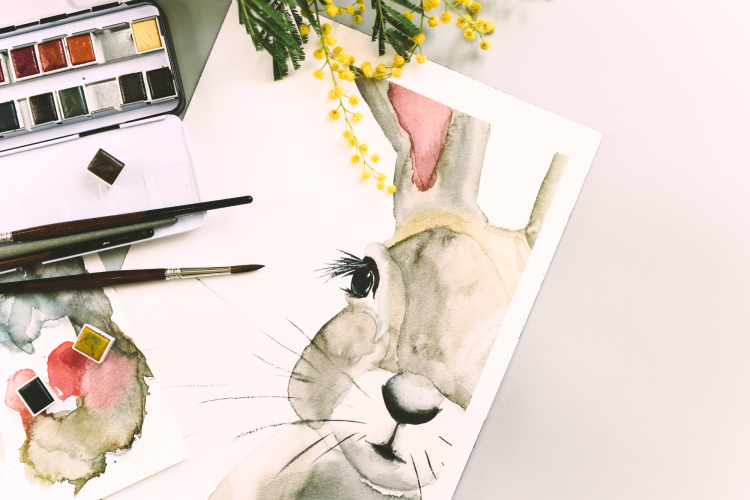
For a tribute to your beloved fur babies as well as a great watercolor painting idea, experiment with wet and dry methods to create fur and hair textures while testing intriguing color sets. Frame the results and add them to the family gallery.
29. Farm Animals
Cows, pigs, chickens and sheep all make rewarding watercolor painting ideas because they don’t demand precision. Rounded forms and expressive faces allow for playful interpretation. You can either go with a realistic approach or try something a little more lighthearted and cartoonish.
30. Whales
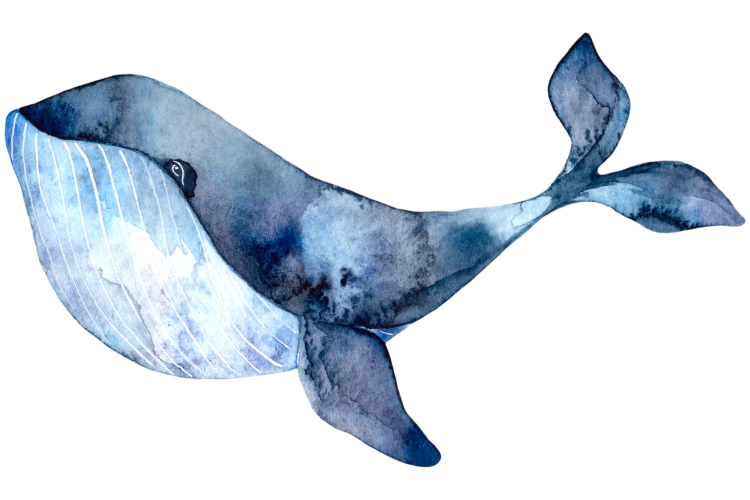
Watercolors are the perfect medium for creating the shimmering glow of these majestic beauties. Use black, white, blues and grays to build transparent layers.
Large, fluid washes create mass, while subtle highlights suggest movement beneath the surface. Transparent layering keeps the subject feeling weighty without becoming heavy.
31. Lions
The king of the jungle makes a fantastic watercolor painting idea for practicing soft textures. Capturing their furry layers and glowing coats by blending various shades of ocher, gold and sepia tones.
You don’t need to define every strand. Let the paint do some of that work for you.
32. Exotic Fish
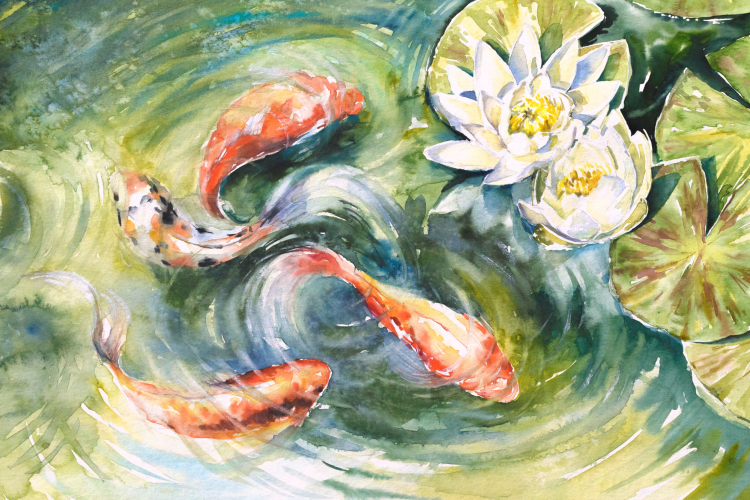
Fish naturally suit watercolor because their movement mirrors how paint behaves in water. If you can, work from a live model like koi or betas to get a true sense of how light behaves. As with creating other tropical watercolor animals, the more color the better.
33. Zebras
Zebras are a strong exercise in contrast. Shade the white stripes with bands of blues, purples or greens to create depth without relying on hard outlines. A bold background pushes the subject forward and simplifies the composition.
34. Bears

These woodland giants make a magnificent watercolor painting idea. Try expressing shadow, highlights and reflected light against their mostly brown fur in blues, magentas, reds and more. Find images of bears in various lighting to find one that works easily for you.
Abstract Watercolor Painting Ideas
Abstract painting ideas remove the pressure of representation entirely. Instead of worrying about whether something “looks right,” you pay attention to timing, saturation and how materials interact. Techniques like resist, texture and lift-offs make the learning very tactile and immediate.
For many beginners, this is where watercolor finally clicks, because the process itself becomes the point.
35. Salt Wash
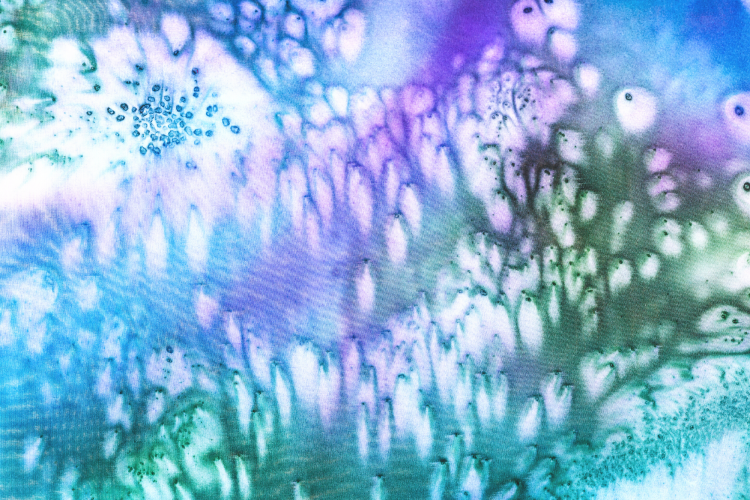
This abstract watercolor painting idea lets you create marbled veining that looks like magical sprays. Spread a wash of color on your paper and sprinkle ordinary table salt into it.
Then watch as the salt dissolves and pushes the color all over the place. Brush off the remaining salt when the paper dries.
36. Alcohol Spread
Splattering alcohol into intense color washes pushes pigment away from the drops, creating tiny white spots that look like stars. Layer up several colors and see what beautiful multi-hued reveals you can achieve for an intriguing aesthetic painting idea.
37. Wax Resist
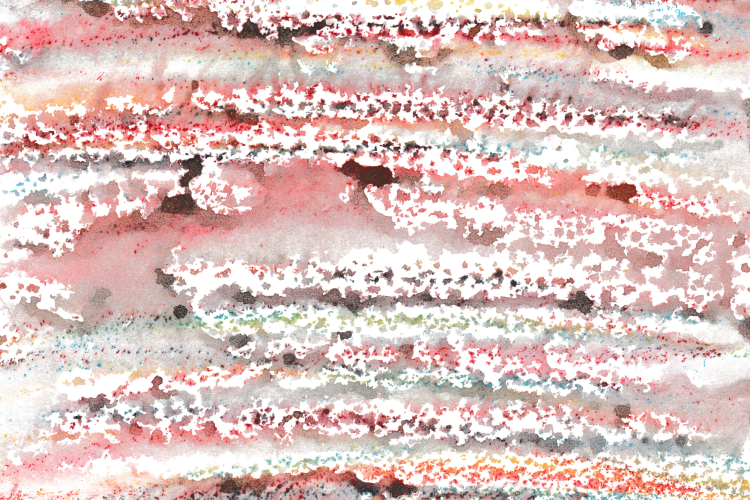
Did you know you can block out areas on your paper and keep them pure white? Something waxy, like a white birthday candle or a white crayon, rubbed onto the paper will prevent the color from seeping in. When finished, carefully rub off the wax to see the negative space shine.
38. Tape Resist
Create perfect lines and angular abstract watercolors by laying strips of masking tape on your paper before painting. Carefully remove the tape when your paper dries.
This watercolor painting idea is great for creating sharp angles. Or try tearing the edge of the tape for a cool deckled effect.
39. Soap Resist
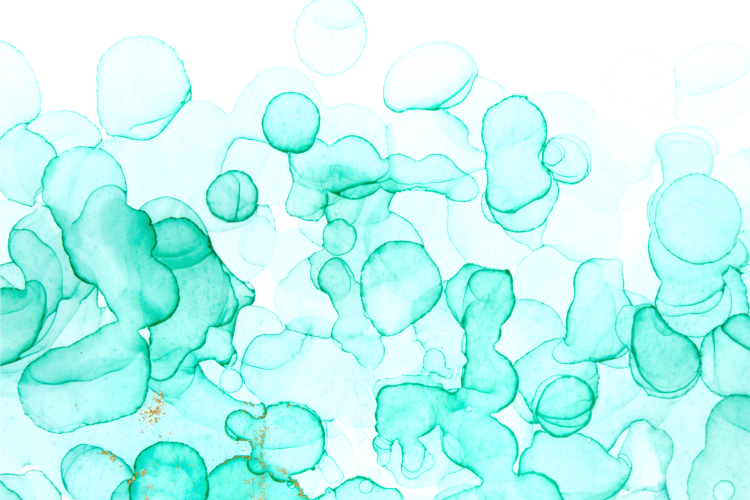
Suds and bubbles added to watercolors create delicate webs and lacy patterns everywhere. Use a soda straw to blow bubbles into a drop of soap added to a wet-on-wet color wash on your paper. The results are unpredictable, which is part of the appeal.
40. Plastic Wrap Lift
This watercolor painting idea is a fun and simple way to create an amazing texture. Crinkle a piece of plastic wrap and press it into wet paint to see white or lighter-colored veins appear. Or try dipping the wrap into wet color, then pressing it to the paper to create colorful splotches.
41. Soda Straw Airbrush
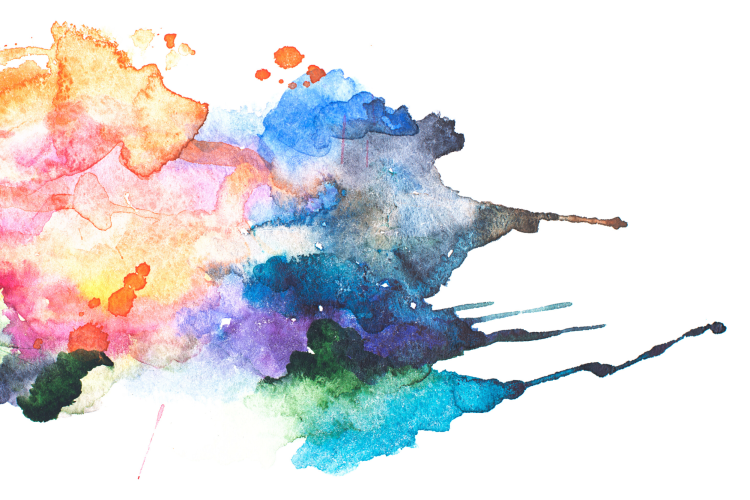
Build up a bit of liquid color on the surface of your paper and push it around by blowing through a straw. The result? Vivid tie-dye splashes of color explode off the surface. You can also try different pour painting methods for similar results.
42. Yarn Drag
Try dipping a length of yarn or string through wet watercolors and dragging it along the paper to see what sorts of abstract designs occur. It’s one of the easiest watercolor painting ideas ever. Anyone can do it.
43. Tissue Paper Press
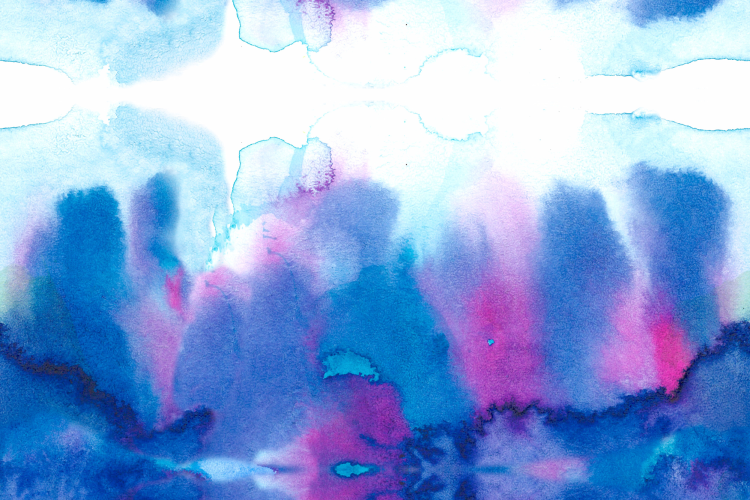
Press a damp piece of tissue or paper towel into your watercolors and mash it onto your paper. You’ll create a kaleidoscope of soft textures and colors in your image.
Watercolor starts to make sense once you let the paint do some of the work. Watching how it moves, blends and dries teaches you more than trying to control every stroke.
These watercolor painting ideas are meant to help you learn the medium as you go. The more you play around with color and water, the more you’ll discover methods that work best for the projects you have in mind.
For even more fun painting ideas, check out other experiences happening on Classpop!