Valuable Pottery Marks: Identification Guide & What Matters in 2026

You’re in a thrift store, turning a plate over in your hands and wondering if the mark on the bottom actually means something. Could it be one of those valuable pottery marks collectors look for, or just a decorative stamp?
Pottery marks can reveal where a piece was made, who created it and sometimes even when it was produced. Once you know how to read them, they become one of the most useful tools for spotting pottery that may be worth more than it looks.
Jump to Section
- Why Valuable Pottery Marks Matter
- Valuable Pottery Brands Collectors Look For
- Most Valuable Pottery Marks Explained
- How Do I Find Out if My Pottery Is Valuable?
- How Do I Identify My Pottery Mark?
- What Makes Pottery Marks Valuable?
- How to Tell If Pottery is Vintage?
- How Do I Find Out If My Pottery is Valuable?
- What Pottery Names Are Worth Money?
- Top 10 Most Valuable Pottery Marks by Recognition
Why Valuable Pottery Marks Matter
Professional antique pottery dealers and amateur collectors alike all rely on valuable pottery marks to help them identify where and when a piece of pottery was made. For anyone new to collecting, knowing what to look for can feel overwhelming at first. But it doesn't have to be.
There are well over 100 valuable pottery marks, as well as a host of valuable pottery brands to learn and sift through as you search second-hand stores and estate sales. Some marks point to well-known manufacturers, while others indicate individual artists or specific production periods.
Porcelain, one of the most valuable and sought-after pottery materials, originated in China as early as the Shang Dynasty (around 1766 BCE), according to UNESCO, and its influence cannot be overstated.
As techniques for making, decorating and firing pottery spread across the world, styles and markings evolved alongside them. That long history means antique and vintage pottery is still circulating today. Understanding pottery marks and knowing where to look can help you decide whether a piece is worth your time or whether you should move on.
Whether you’re trying to identify valuable pottery marks on items you already own or learning which pottery brands tend to hold value, the sections below break down what these marks mean and how collectors use them.
You can also check our guide on how to design a potter's mark if you're planning to create your own pottery.
Valuable Pottery Brands Collectors Look For

Collectors often start by learning which pottery brands have a reputation for quality, craftsmanship and long-term demand. While a pottery mark helps confirm authenticity, knowing the names behind those marks gives important context when assessing a piece.
Before looking at specific brands, it helps to clear up a common point of confusion: ceramics vs pottery. Ceramics is the broader category that includes all non-metal materials shaped and fired from types of clay. Pottery refers more specifically to ceramic vessels made to hold something, such as plates, bowls, mugs and vases. For simplicity, we’ll refer to these everyday objects as pottery throughout this guide.
Before industrial factories existed, pottery making was a skilled, largely manual craft. Makers used identifying marks to signal where a piece came from and who produced it. Over time, these marks became an essential way for buyers and collectors to distinguish between different workshops, regions and artists.
Like a fingerprint, no two pottery marks are exactly alike. It takes lots of study and familiarity with valuable pottery marks to be able to identify which pieces are most valuable.
Some pottery brands gained recognition because of their consistency and innovation, while others became valuable due to limited production or strong artistic influence. Well-known names from China, Britain and Europe often appear in collections because they represent long-standing traditions and technical excellence.
It’s important to note that a recognizable brand doesn’t automatically guarantee high value. Condition, age and rarity still play a major role. That said, learning which pottery brands collectors look for can help narrow your focus when researching marks or evaluating pieces you come across.
Most Valuable Pottery Marks Explained

While pottery brands give you a sense of reputation, pottery marks are what collectors rely on to confirm details about a specific piece. A mark can indicate the maker, location, production method or even the time period in which the pottery was created.
Pottery marks generally fall into a few broad categories. Factory marks identify the manufacturer and often include a symbol or logo associated with a specific workshop or company. These marks are especially useful for tracing mass-produced or widely distributed pottery.
Artist signatures are another important category. These marks usually appear on studio pottery or limited-run pieces and can be handwritten, incised or painted. In some cases, a simple signature or monogram can add significant value, particularly if the artist is well known or associated with a specific movement or era.
You may also encounter impressed or coded marks, which are pressed into the clay before firing. These can include numbers, letters or symbols that refer to production runs, glaze types or date ranges. While these marks are not always obvious at first glance, they can provide valuable clues once you know how to interpret them.
It’s worth noting that pottery marks are not always straightforward. Some manufacturers changed their marks over time, and others reused similar symbols across different periods. This is why cross-referencing a mark with trusted identification guides or databases is often necessary.
Understanding what a pottery mark is trying to tell you helps move the process beyond guesswork. Instead of focusing on surface decoration alone, collectors use marks to place a piece within a broader historical and production context.
How Do I Find Out if My Pottery Is Valuable?
Many different antique and vintage pottery pieces are worth money; the trick is to know which are popular. Antique pottery from China is some of the most valuable, as these pieces are often the oldest and have the longest history.
British China is also highly sought after, with companies like Wedgwood, Royal Doulton or Royal Crown Derby carrying quite a bit of prestige in the pottery world. European pottery, like Royal Delft china or Meissen pottery from Germany, are also great pieces to look out for if you’d like to add value to your collection.
One thing to note is that while these large names are desirable, your pottery doesn’t have to be made by one of these manufacturers to be worth money. Several factors go into deciding what a piece of pottery is worth.
Of course, one of the primary things that makes a certain pottery mark valuable is the company’s reputation. But this isn’t the only thing. Factors like age, quality and rarity also contribute to the value of the piece.
When looking for valuable pottery, try to identify the approximate age of the piece. Then look at the condition of the piece to see if it's chipped, cracked or discolored.
Finally, look for any clues to how rare the piece is. Items that were made in limited quantities are more valuable than those that were produced in large batches.
How Do I Identify My Pottery Mark?

Because there are over 100 valuable pottery marks, it’s best to start by doing some online research using sites like Antique-Marks.com that contain glossaries of the different marks. These pottery mark identification guides can help because many manufacturers changed their stamps over time.
It can be almost impossible to know all of the marks by heart, so you could also consider using a pottery mark identification app that you can bring with you when you are shopping to quickly identify marks on the go.
How to Tell If Pottery is Vintage?
Reading the markings is really the most foolproof way to understand if your pottery is vintage. They're really the most reliable source of information about a piece.
Many antique ceramic projects won’t have markings, but if you have read up on the subject and learned more about the look, feel and weight of the pottery, you will gain an eye for it.
During your research, spend some time reading about different color palettes and glazing pottery; different time periods are often reflected in the different methods and colors used. Another gauge of vintage or antique pottery is how it looks and feels.
Often older pieces are heavier and sturdier. You can also look for slight imperfections that will show the piece was made by hand rather than in a factory.
How Do I Find Out If My Pottery is Valuable?
Age alone doesn’t automatically make pottery valuable. The real insight often comes from the mark itself. A clear maker’s stamp from a respected manufacturer can signal quality and demand, while condition still plays a major role. Chips, cracks or heavy wear can lower value, even on well-known names like Wedgwood. Rarity matters too. Pieces made in limited runs or from short-lived production periods tend to carry more weight with collectors, especially when they’ve been well cared for.
If you want this a touch warmer or more collector-leaning, I can nudge it further in that direction.
Top 10 Most Valuable Pottery Marks by Recognition
Some pottery marks are widely recognized by collectors because they appear frequently in museums, auctions and reference guides. These marks are often associated with long-established workshops, distinctive production techniques or historically important periods in ceramics.
The pottery marks below are not ranked by price alone. Instead, they’re grouped by recognition and collectability, meaning they’re among the most commonly referenced when people begin researching valuable pottery. As with any collectible, value ultimately depends on condition, authenticity and demand at the time of sale.
Use this list as a starting point rather than a checklist. A lesser-known mark in excellent condition can sometimes be worth more than a famous one that’s damaged or heavily reproduced.
1. Chinese Reign Marks

If you are truly looking for the oldest of the antique pottery marks, Chinese ceramics can certainly fit the bill. Chinese ceramics often feature reign marks that indicate the ruling dynasty during which a piece was made.
Rather than a maker’s mark on the bottom, the oldest Chinese pottery will feature a reign mark that tells the dynasty during which the piece was made. These marks are often difficult to distinguish, not least because they are written in Chinese characters!
They are also often faked, so it’s important to take any pieces to an expert, as these are often the oldest and most valuable pieces of pottery. You’re more likely to find these pieces on sale at high-priced auctions rather than at an estate sale down the road, but keep your eyes open, just in case!
2. Wedgwood’s Iconic “W”

Chances are if you’ve been reading about porcelain at all, you’ve read the name Wedgwood, with one of the most valuable pottery marks. The founder, Josiah Wedgwood, is often called the “Father of English Potters,” which tells you something about his reputation.
To identify the traditional Wedgwood marks, look for the words “Wedgwood” or “Wedgwood & Bentley.” You might also see just the letters “W & B” on the underside of the pottery. Wedgwood pottery is characterized by its traditional and classical motifs, as well as its signature blue glaze.
3. Delft Blue Pottery

Delft pottery is some of the most valuable, but it is also one of the trickiest to identify. Keep in mind that the word “Delft” doesn’t signify a brand, so always check these pieces against a pottery marks identification guide or consult an expert.
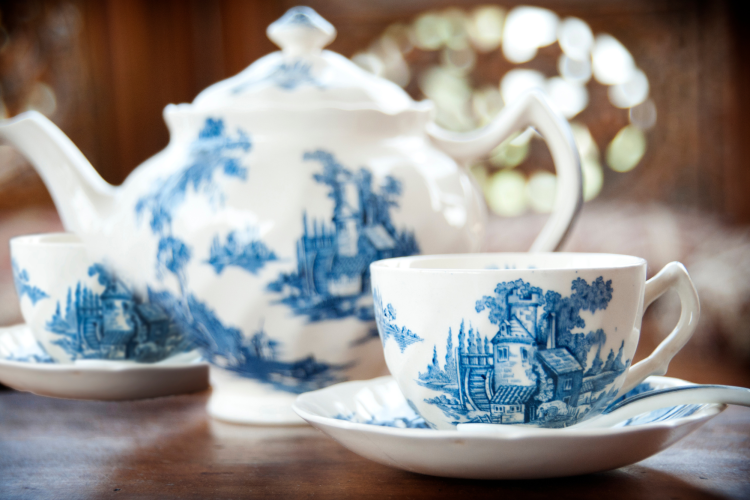
Delft pottery originated in the Netherlands in the 1650s, and it is a combination of European and Asian cultures. You’ll be able to spot Delft pottery by its most iconic blue and white color scheme, but later pieces do incorporate other colors, as well.
The traditional, Asian-inspired designs might give you some pottery painting ideas of your own! The valuable pottery marks to look for with Delft pottery are an image of a jar or the initials “JT” with the word “Delft.”
4. Meissen’s Crossed Swords

Keeping to the European continent, Meissen is a German porcelain manufacturer that is quite valuable. The company began in 1710, but its famous crossed swords mark first was used in the 1720s. When looking for valuable pottery marks with the Meissen pottery brand, you will often see a dot or star between the tips of the crossed swords.
This china is highly sought after, and it has very elaborate designs. You can often tell the age of this pottery by the color. If the piece is a smokier white, it was probably made before 1720. If it is a brighter, more brilliant white, it most likely dates to the end of the 1720s.
5. Moorcroft Pottery

This English company is still in business today, and continues to create beautiful pieces. Some of its older pieces (the company began in 1897) are quite valuable.
The vintage pieces are characterized by botanical designs and bright glazes that are unlike the traditional, classical patterns made by other companies. For valuable pottery marks, look for the word “Moorcroft” or “W.M.” as well as a factory mark and pattern number to identify these pieces.
6. Vintage Spode

This English company, which was founded by Josiah Spode, is still creating pieces today, in combination with other brands like Royal Worcester. You might have seen their classic Christmas tree pattern appearing around the holidays.
In fact, many of their modern designs feature elements that have been in use by the company for over 100 years. To identify vintage or antique Spode china, look for its classic blue and white transferware. The valuable pottery marks to look for are simply the word “Spode” or “Spode’s Stone China.”
7. Coalport Porcelain Company

Another English company that produced some beautiful works of art was the Coalport Porcelain Company, which was founded at the end of the 18th century. If you’re on the hunt for these pieces, try to find ones made in 1881, as they are the most valuable.
There are several valuable pottery marks to look for, including the word “Coalbrookdale” for older pieces or an image of a crown for later pieces. You can find Coalport still in operation today as part of the Wedgwood Pottery company.
8. Roseville Pottery

Valuable or vintage pottery doesn’t just belong to British or European manufacturers. This company began in Ohio in 1890 and was a hugely popular brand at the time. You’ll know a piece is Roseville-made with floral prints and bright designs.
Its maker’s mark is often further distinguished with numbers that represent the shape and size of the piece. For these valuable pottery marks, be on the lookout for Roseville Pottery’s signature raised “Roseville” mark.
9. Weller Art Deco Pottery

Art Deco pottery is notable for its unique style and geometrical designs. One of the most well-known distributors of art deco pottery was the Weller Pottery Company. These pieces were only produced between 1872 and 1948, which means there is a limited supply.
On the bottom of each piece produced between 1930 and 1940, you’ll find the valuable pottery marks with the name “Weller” in a loopy, cursive script. Often these pieces are meant for the garden or are hearty brown and white cooking ware.
10. Paul Revere Pottery

Another American pottery company with a unique history is the Paul Revere Pottery Company. This brand began around 1907 in conjunction with the Saturday Evening Girls Club. The idea was to provide jobs for immigrant women who had just moved to the United States.
You’ll often find one of two marks depending on the date of the piece. First, “SEG” for Saturday Evening Girls, and later the Paul Revere Seal with the location (Boston) or name of the company. Using a helpful tool like a pottery mark identification app can help you more precisely identify the pottery!
We hope this guide to identifying valuable pottery marks has been helpful. If your interest extends beyond simply shopping for vintage pottery, we encourage you to tackle a new skill like hand-building pottery, which makes a perfect starting point for pottery for beginners. Then you can learn more about ceramics from around the world, like Italian pottery and Mexican pottery.
For even more pottery experience ideas, check out other experiences happening on Classpop!