How To Create a Thrilling DIY Escape Room at Home in 2026


Creating a DIY escape room is a whole lot easier than you think. In fact, it’s a fun family activity that you can take on with things you already have around your house. By creating a DIY escape room, you can get complete control over how your mystery unfolds. Set up a fun murder mystery game or keep things light with a treasure hunt or space adventure. There are endless DIY escape room ideas to explore! If you’ve never designed an escape room before and don’t know when to start, we’ve got you covered. If you’re itching to know some good escape room ideas or the most common escape room puzzles, read on.
Jump to Section
- How To Get Started With Your DIY Escape Room
- DIY Escape Room Ideas
- DIY Escape Room Puzzles
- DIY Escape Room FAQs
How To Get Started With Your DIY Escape Room
As escape rooms have become more popular over the years, more and more people have discovered how simple and rewarding it is to create their own versions at home for birthdays, game nights or just for fun. But getting started can be intimidating. Before we get into escape room DIY ideas, let’s break down how to put together your own DIY escape room.
Start with Theme and Storyline

An escape room experience is always better with a theme and some sort of story that guides the players through it. It makes the experience more immersive and can raise the stakes. There are probably a million different directions you can go with this, so don't be constrained. For instance, maybe you're creating an escape room for a family member's birthday, where their present was stolen by a mischievous fairy who left cryptic clues behind. While traditional escape rooms require that players literally escape from a physical space, you don't necessarily need to adhere to that. You could trap players in a mummy's tomb that suddenly closed, a space station whose computer has gone rogue, a Victorian haunted mansion or have them repair a broken time machine to get back to the present. The sky's the limit.
Plan Your Game Flow and Create Your Puzzles
Once you have your theme and storyline, figure out a roadmap for how players will move through your escape room and win. If you're just starting out, keep it simple and aim for about five different tasks or puzzles where one needs to be completed to access the next. Tasks are things that take time but are immediately obvious to do, like searching the room for components, solving a maze where the path spells out a word, putting a jigsaw puzzle together to reveal a message or hitting a target with a Nerf gun. Tasks boost confidence because they're easier to accomplish, but you want to balance them out with puzzles that require more ingenuity to solve.
Decide on Your Game Structure
When designing the structure of your DIY escape room, you can do a linear game that moves in a straight-line fashion from puzzle A to puzzle B and then C. Or, you can add in mesh games so that you have multiple starting points that move toward a central puzzle where everyone can make their way toward an eventual end.
Create a Seamless Flow

A good escape room usually feels like a roller coaster with lots of twists and turns and ups and downs. But you need to build momentum in certain areas in order to accomplish those things. You don't want to start your game off with the hardest puzzle; you want to build towards that. Create a few easier tasks in the beginning to create momentum among the players.
This also helps stragglers buy into the game because you've created an easy win right out of the gate. Pace the game well with good ebbs and flows, have multiple tracks and then bring them back together and separate them again. This is a key element that separates an “okay” game from a great one. Lastly, make sure each puzzle flows logically into the next. You want the end of the game to build momentum so it feels like the descent of a ride.
Embrace the Discovery Process
The discovery process is what makes escape rooms fun. The first thing you do when you walk into one is start searching. You may be flipping through objects and never know where you’ll uncover the right clue. So when designing your own escape room, don’t overlook this aspect. Hide items in unexpected places and vary the difficulty of each hiding spot because the thrill of finding them is part of the fun.
Organize Your Puzzles Strategically
The last thing you want is for your players to get frustrated because they can't solve anything at the beginning, so put the easiest puzzles first. You could start them off with hidden items peppered throughout the room or perhaps a straightforward riddle or math equation that makes for an easy win. Keep the harder puzzles for the end so that players can get into the groove of the escape room and beginners don’t feel overwhelmed. Also, consider putting your coolest and most difficult puzzles last, so that the game ends on a high note.
DIY Escape Room Ideas
Once you've got your theme and puzzles planned out, it's time to bring your DIY escape room to life with creative touches that make it memorable. These little details are what make your escape room feel special and immersive, whether you’re planning sleepover games for kids or creating an adult game night experience for Christmas.
Start with a Wax-Sealed Letter
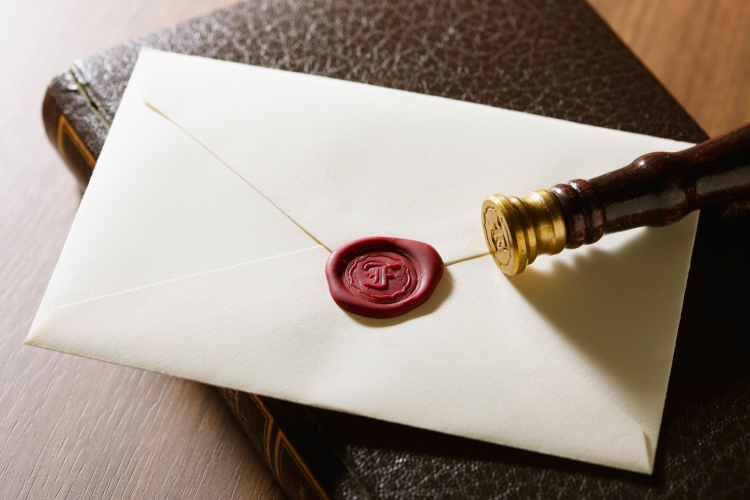
A cool way to start an escape room is to hand your players a letter. But not just any old letter! Take the time to stain the paper with a tea bag, and finish it off with a wax seal. You can hide clues within the letter, write numbers in it, highlight or underline them so that the letter itself may be an instruction as to what you do in the escape room, what your goal is, what you need to do to escape, etc. Plus, a letter is a great way to get the ball rolling when planning your DIY escape room.
Use Transparent Sheets for Maze Overlays
If you're designing a DIY escape room for home, school or work, you'll do well to pick up as many transparent sheets as you can. You can use them in a variety of ways, such as a maze overlay. If you have a maze that you've created as a base, you can code two transparencies with an in-arrow as well as an out-arrow that correspond with the ones on the maze. That way, when all the pieces are found, the players can see how to pick up all the different symbols along the path. It's a cool element that adds a sense of mystery to the game.
Create Multiple Puzzle Lines

Make multiple lines of DIY escape room puzzles so that if the group splits up, you have multiple paths for them to take. That means having at least two starting places. For example, you could hand them a letter while also providing something for them to find in the room that they can immediately solve, which then leads them to something else and so on. Of course, this should eventually funnel to a single puzzle that takes them to the end. A flow chart can help plan all of the different twists and turns.
End with a Jigsaw Puzzle
One cool way to end a DIY escape room is to have little pieces of a puzzle hidden throughout the game that players can eventually find to figure out the final solution. One example of this would be a jigsaw puzzle. They would find pieces in different boxes throughout the game and realize that they have to open all the boxes and align all the pieces to get the final clue at the end.
DIY Escape Room Puzzles
A puzzle is a challenge that doesn't have an immediately obvious solution. It generally requires an "a-ha" moment, which is what gives the players who solve it a sense of accomplishment. However, if the puzzle is too hard or obscure, then it can be discouraging. That’s why the goal of creating DIY escape room puzzles is never to stump the players. Rather, it's to create puzzles that seem perplexing initially but ultimately can be solved and provide a sense of accomplishment. Here are some DIY escape room game ideas and puzzles you can try when designing your own escape room.
Disassemble a Message

Break a secret code or message into pieces and scatter them across a jigsaw puzzle or create an origami puzzle that needs to be folded just right to reveal the clue. When everything comes together, your players will feel like real-life spies or treasure hunters. This works great because it combines a task (putting the puzzle together) with the satisfaction of discovering a hidden message once they've completed it.
Use Your Phone as a Lock
Turn your phone into a locked box by setting a passcode. This is a clever puzzle because most phones let you create either a traditional number sequence or one of those sliding pattern locks. When players unlock it, they can discover all sorts of clues. Try putting a screenshot of a secret email on the screen that gives them their next instruction. Or show them a "before" photo of the room that reveals where something was originally placed, like a vase that's now in a different spot with a key hidden inside it. This makes an object that would normally be too well hidden suddenly solvable.
Navigate the Minefield

Set up a minefield challenge where one player has to cross a path blindfolded while the others shout directions from across the room. Use pillows, toys, stuffed animals or anything as "mines" they need to avoid stepping on. This is a sure-fire way to add some spy-level fun to your DIY escape room game and get everyone actively participating. You can theme it however you want: maybe they're navigating through laser security beams after the power went out, they're crossing a booby-trapped temple floor or if you're planning Halloween games, they could be tiptoeing through a haunted graveyard filled with cursed tombstones.
The Marble Jar Puzzle
Just like when you’re making DIY board games or party crafts, the key to having fun with your DIY escape room is to use what you have. For instance, you can make an escape room puzzle with simple supplies like marbles and some glass jars or a chalk bottle. Start by labeling your bottles first with symbols that represent whatever theme you're exploring through your escape room puzzle. Once you've labeled your jars, decide how many marbles you want to put into each jar. You can drop three marbles in one, four in another and one in another, etc. Just make sure to write this all down so you remember it. This puzzle in particular is an easy one because once the marbles are in the jars, your participants simply have to figure out the order of the jars and count the marbles in each to get the code.
The Playing Card Puzzle

When deciding how to start your DIY escape room, consider what you want hidden in the room. Specifically, the things that you want players to search for and find first. For instance, if you want to include card puzzles, you can give them four playing cards and then, elsewhere in the room, they'll find something that tells them which order to put them in. For example, you could have one card be a club, then a heart, then a diamond and a spade, and so on. The suit order could then be translated into a numerical code to open the lock.
Try a Variety of Puzzles
Variety is key when choosing your puzzles. This way, every person can use their own talents and abilities to move through the room, which helps everyone feel valued. Some people are skilled at finding hidden items, others excel at logic puzzles or pattern recognition, while some think abstractly and make unexpected connections. So having a variety of puzzles for everyone to choose from will help everyone feel included and stretch their minds.
DIY Escape Room FAQs
How Do I Make an Escape Room at Home?

The first step in creating a fun escape room is picking a setting and theme that brings your world to life. Then, choose props and clues that fit naturally with your theme to help everyone understand what's going on and keep the story feeling real. It's also helpful to map out a game flow chart so you can see how players will move through your escape room from start to finish.
This chart keeps everything organized and makes sure one puzzle leads logically to the next without any confusing jumps. Remember, escape rooms, whether you're using them for team building games at work or just having fun with friends at home, are about the whole experience, not just solving puzzles. A well-designed escape room pulls players in on multiple levels and creates memories that last way longer than just figuring out the answers.
What Are the Five Parts of an Escape Room?
Every great escape room has five essential components that work together to create an unforgettable experience. First, there's the research phase, where you figure out your theme, storyline and what kinds of puzzles will work best. Next comes the build-up, which is all about creating anticipation and drawing players into your world from the moment they arrive.
Then you have the constraints: the rules, time limits and boundaries that create the challenge and urgency. The content is where all your puzzles, clues and tasks come together to form the actual gameplay. Finally, there's the execution, which is how smoothly everything runs on game day, from setting up the room to guiding players through hints when they get stuck.
How Many Puzzles Are in a 1 Hour Escape Room?
The number varies, but most one-hour escape rooms include somewhere between 10-20 puzzles. It's not about cramming in as many puzzles as possible, but rather making each one count and keeping the game flowing smoothly.
Sure, designing your own escape room takes some time and effort upfront, but the payoff is huge. You'll create memories that your friends and family will talk about for years to come and you'll have a go-to activity that beats typical party games every time. Whether you're hosting a small get-together or planning party games for adults with a larger crowd, escape rooms encourage teamwork, spark creativity and lots of laughs along the way.
For even more fun activities to try, check out other experiences happening on Classpop!